 LEN
I’ve been seeing a lot of patients with LET’s lately. It feels like every other ACL reconstruction coming through our door has one now, and it’s not just the hamstring grafts anymore. I’m seeing them with patellar tendon and quad tendon grafts too. Young athletes or older recreational athletes, it doesn’t matter. So I wanted to do a deep dive into this topic for myself and for you.
Recently, I had a college soccer player come in who takes the cake. He had his left ACL reconstructed 3 years ago with his patellar tendon. Fast forward and he just had a scope to clean up his meniscus. While he was under, he asked his surgeon to add a lateral extra-articular tenodesis (LET) to reinforce that 3 year old ACL. Why? Because he had an LET with his right ACL reconstruction 2 years ago and that knee has felt really good ever since. He wanted the same thing on the other side.
That got me thinking. If patients are asking for it by name, we better understand what it is, who it’s for, and what it changes in rehab.
What is a lateral extra-articular tenodesis?
The ACL is the main restraint to anterior tibial translation, but it’s not working alone when it comes to rotation. The anterolateral structures of the knee help control internal rotation of the tibia, which is a big part of that pivot shift feeling of the knee giving way.
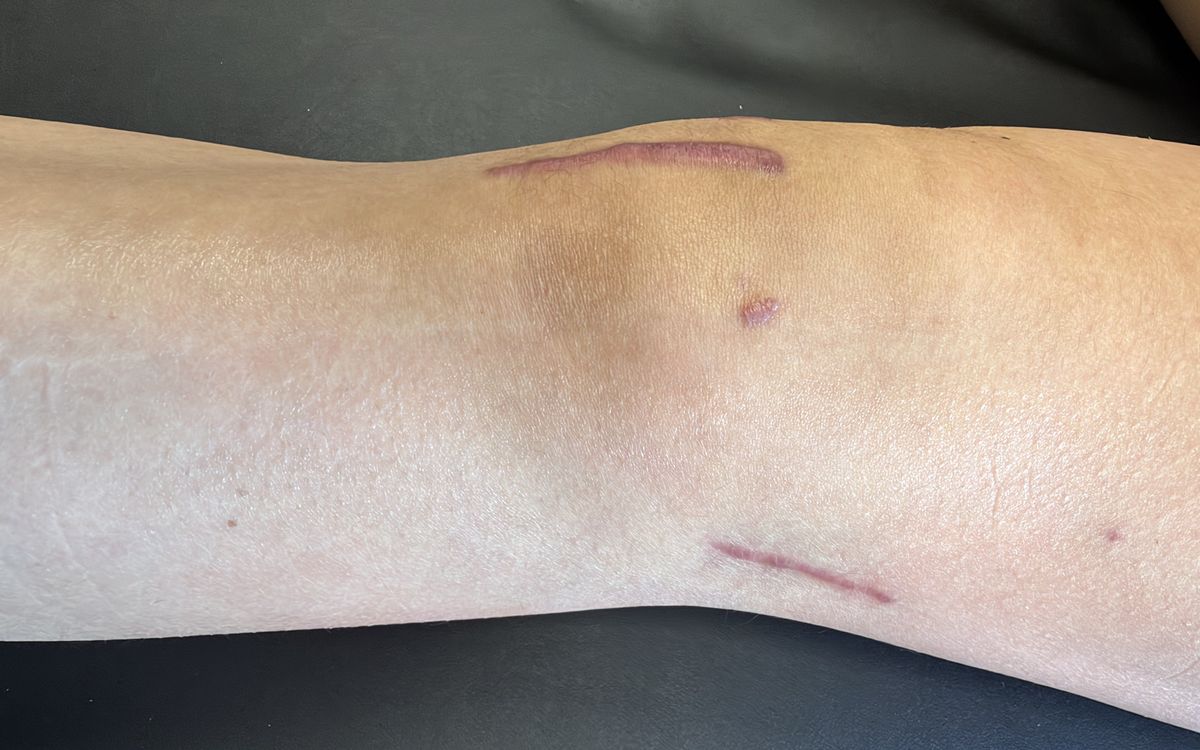
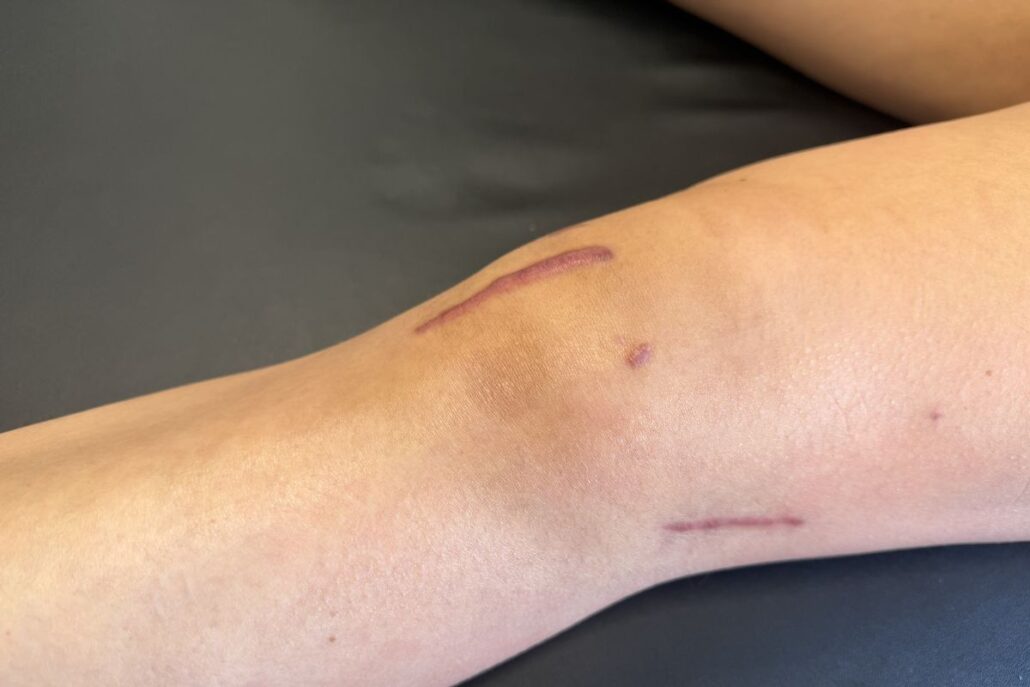
An LET is a small add on procedure. The most common version is a modified Lemaire. The surgeon takes a thin strip of the IT band, leaves it attached at Gerdy’s tubercle, passes it under the LCL, and fixes it to the femur just above the lateral epicondyle. It acts like a check rein against too much internal rotation and takes some stress off the ACL graft while it heals and matures.
The research that changed things
The big one is the STABILITY trial. They randomized 618 young, active patients, 25 and under, to a hamstring ACL reconstruction with or without an LET. At 2 years, graft rupture was 11% in the ACL alone group and 4% in the ACL plus LET group. Persistent rotatory laxity or rupture dropped from 40% to 25%. You’d need to do about 14 LETs to prevent 1 graft rupture over 2 years. That’s a pretty good number.
A follow up analysis of the same group showed the LET was protective, while younger age, a steeper tibial slope, high grade laxity before surgery and getting back to sport earlier all raised the risk of rupture. That last one should jump out at every PT reading this.
Then last year, an international consensus of 53 experts voted on who should get one. They strongly recommended an LET for:
- Young, active patients getting a hamstring graft
- A grade III pivot shift
- Knee hyperextension
- Skeletally immature patients
They also recommended it for revisions and chronic ACL deficiency, and said it should be considered in young, active patients getting a patellar tendon or quad tendon graft, athletes returning to pivoting sports, patients with a tibial slope over 12 degrees, and anyone with a history of an ACL injury on the other knee.
My soccer player checks two of those boxes. He’s a pivoting athlete, and he’s already had an ACL reconstruction on the other side.
What about patellar tendon and quad tendon grafts?
This is where it gets interesting, because this is exactly what I’m seeing in the clinic. STABILITY 1 only looked at hamstring grafts. Patellar tendon and quad tendon grafts are stiffer, and we just don’t know yet if adding an LET gives the same benefit.
That’s why the same group launched STABILITY 2. They’re randomizing almost 1,300 young athletes across 31 centers to a patellar tendon or quad tendon graft, with or without an LET. They’re also looking at strength, hop testing, return to sport and whether women do better with one approach over another. I’m looking forward to seeing those results in the future.
Until then, I’m seeing a lot of surgeons add it anyway in their higher risk athletes, especially pivoting athletes like my soccer player.
What changes in rehab?
Not a ton. But there are a few things you should know so you’re not caught off guard.
Expect more lateral knee pain early. STABILITY showed the LET group had more pain at 3 months, and it resolved by 6 months. Patients will often point right to the lateral femoral epicondyle or the IT band incision. It’s usually the procedure, not a problem with the ACL graft. Reassure them and manage it with exercise modification, compression and expectation management.
Watch the quads closely. If you’ve read my post on quad tendon ACL rehab, you know the quad is already the biggest battle. In the STABILITY functional outcomes paper, the LET group had lower quad peak torque and power at 6 months, but it caught up by 12 months. Hop test symmetry was the same between groups at every time point. So the LET may slow quad recovery a bit early on. That tells me to be even more aggressive with quad activation and strengthening, not less. Stack that on top of a patellar tendon or quad tendon graft and you’ve got a quad that’s going to need a lot of work. Use lots of stim, biofeedback, ice, vibration therapy and anything else to overcome the arthrogenic muscle inhibition. I lay out exactly how I use NMES, BFR and the mTrigger in my free ACL quad guide.
Expect patients to feel a little behind. Self reported function lagged in the LET group at 3 and 6 months and then evened out by a year. Tell them this up front so they don’t panic when they compare themselves to a teammate who had an ACL alone. The mental battle is real, so check in on it often.
Don’t rush return to sport. The LET is not a license to get back faster. Remember, earlier return to sport was one of the risk factors for graft rupture in the STABILITY group. The LET helps. It doesn’t replace good rehab and good criteria based decision making.
Why we don’t restrict flexion
I get asked this a lot. We don’t restrict knee flexion after an LET. Motion is to tolerance, same as any other ACL reconstruction. Here’s why that makes sense.
First, where the graft sits. The IT band strip is passed under the LCL and fixed just proximal to the lateral femoral epicondyle. A cadaver study out of Imperial College London measured how different lateral grafts change length as the knee bends from 0 to 90 degrees. Grafts in that spot, running under the LCL, barely changed length through the range. They got a little longer toward full extension, not in flexion. So bending the knee isn’t stretching the LET.
Second, how it’s tensioned. In the modified Lemaire technique used in the STABILITY trial, the graft is fixed with the knee around 60 degrees of flexion and the tibia in neutral rotation, and it’s just held taut, not cranked down. The LET is there to check too much internal rotation of the tibia. It’s not there to block flexion.
Third, in part 2 of the international consensus, 55 knee surgeons agreed unanimously that adding an LET doesn’t require any changes to rehab or return to play timelines. That’s expert opinion, but it lines up with the anatomy and the biomechanics.
So get the motion back like you would with any ACL. If flexion is slow, it’s usually the pain and swelling on the lateral side, not the LET holding the knee back. Still check with your surgeon in case they have their own preferences.
Any downside?
The main long term concern has been the lateral compartment. A 2 year MRI study from the STABILITY group found some small early changes in lateral compartment cartilage in the LET group, but no difference in overall OA scores. The consensus group agreed that modern LETs don’t raise the risk of lateral compartment OA, but that’s expert opinion, and we still need longer follow-up on the actual imaging.
Quick answers
What is an LET?
A lateral extra-articular tenodesis is a small add on to an ACL reconstruction. A thin strip of the IT band is passed under the LCL and fixed to the femur to help control too much internal rotation of the tibia and take some stress off the ACL graft.
Does adding an LET lower the risk of ACL graft rupture?
In the STABILITY trial of young, active patients with a hamstring graft, graft rupture at 2 years was 4% with an LET compared to 11% without one. We don’t know yet if the same is true with patellar tendon or quad tendon grafts. That’s what STABILITY 2 is looking at.
Do you restrict knee flexion after an LET?
No. We let motion come back to tolerance, same as any other ACL reconstruction. The graft barely changes length as the knee bends, and an international consensus of 55 knee surgeons agreed an LET doesn’t require changes to rehab.
Does an LET slow down quad recovery?
A little, early on. In STABILITY, the LET group had lower quad strength and more pain at 6 months, but they caught up by 12 months, and hop testing was no different.
Does an LET change return to sport timelines?
No. The LET is not a reason to get back faster. Return to sport should still be based on criteria, not the extra procedure.
What I take away from all of this
- LETs seem to be here for the long run and here to stay, and we’re going to see a lot more of them with patellar tendon and quad tendon grafts.
- For young, pivoting athletes with a hamstring graft, the evidence is pretty good. For patellar tendon and quad tendon grafts, stay tuned for STABILITY 2.
- Expect more lateral knee pain and a slower quad early. Both usually settle down by 6 to 12 months.
- No flexion restrictions from the LET. Motion to tolerance, just like any ACL.
- Push the quads hard with stim, biofeedback and heavy loading. Don’t let the LET become an excuse for a weak quad.
- Criteria still decide return to sport, not the extra procedure.
My soccer player is already asking when he can get back on the field. We’re going to take our time and he’s ready to go through the process, again!
Want to go deeper on the knee? This is the online course I teach with Mike Reinold. ACL, patellofemoral pain, meniscus, progressive loading and return to sport.
Enroll Now →
Evidence based sports rehab content, course updates and clinical pearls. No spam.
What Actually Changes After ACL Surgery
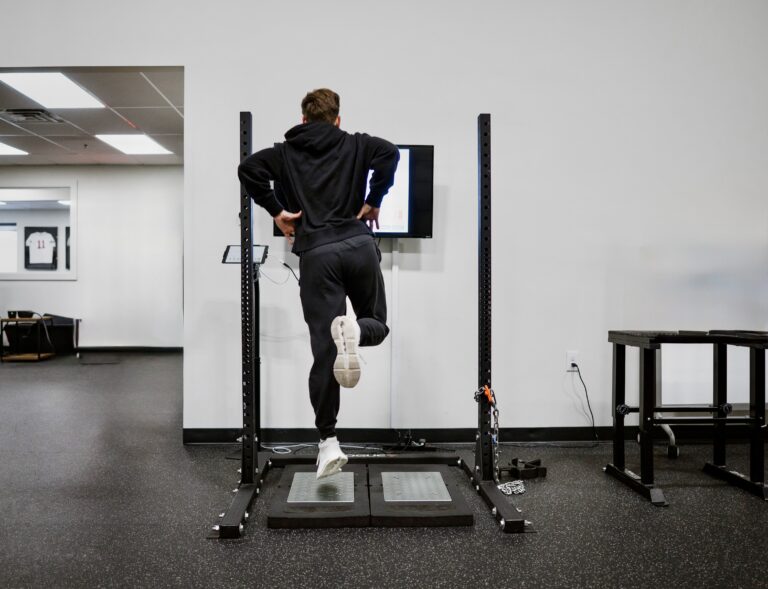
A study tracked 30 athletes at 3, 6, 9 and 12 months after ACL reconstruction. Here is what changed, and why symmetry alone does not mean ready.
Read Post →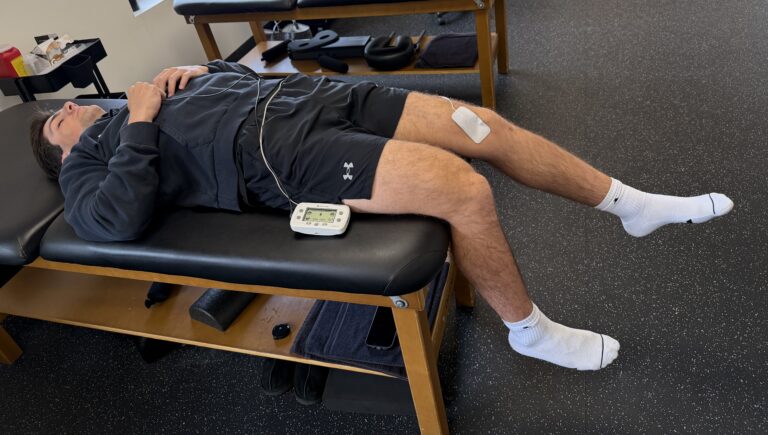
Why Your Quad Tendon ACL Patient’s Quad Is Lagging
Quad tendon ACL grafts are on the rise. Here is why the quad lags after a QT graft and the rehab change most clinicians are missing.
Read Post →
Meniscus Repair Rehab: What Does the Evidence Actually Say?
Root, peripheral or complex, meniscus repairs are not all the same. What the research says on weight bearing, ROM and rehab for each repair type.
Read Post →