 LEN
LEN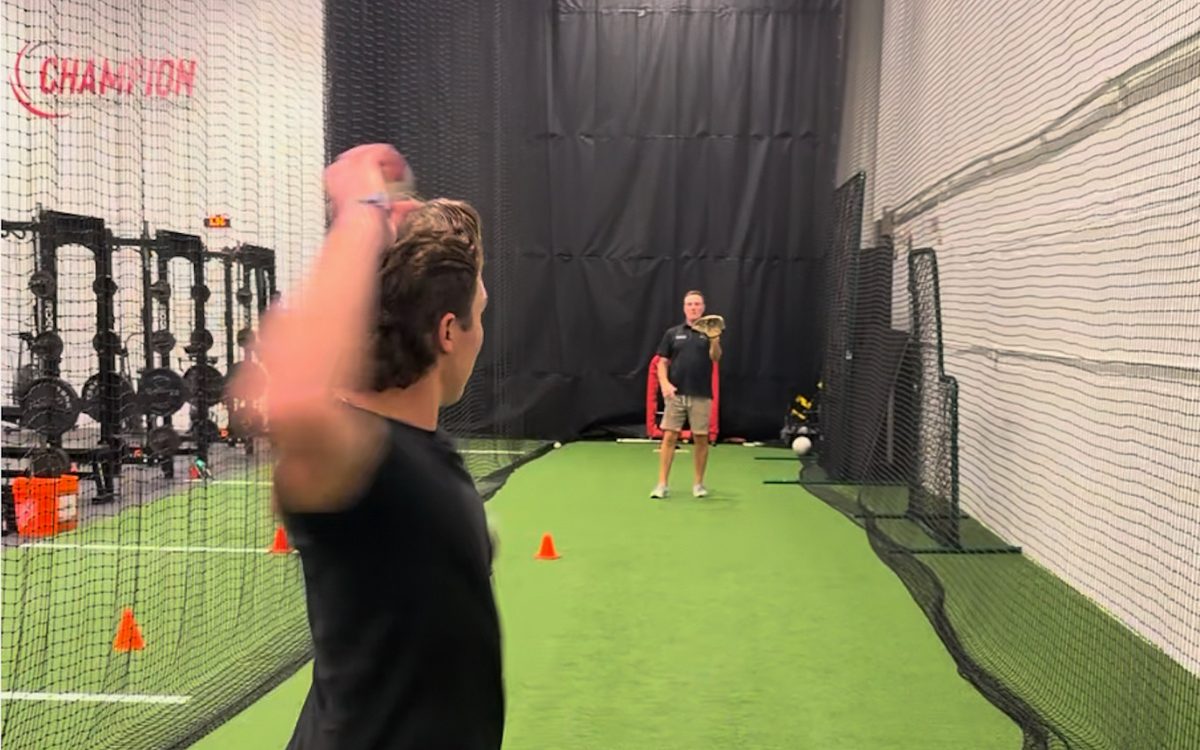
I get asked about interval throwing programs all the time. Usually it’s some version of “which program should I use?” And for years the honest answer was that we all kind of used the same one, no matter what the injury was. If you remember, we used this program for numerous years, and it is still circulating in many doctors’ offices and PT clinics.
A high school kid with a sore elbow who never had surgery and a pro pitcher coming off Tommy John were both handed a throwing program that looked about the same on paper. The injuries are very different, the timelines are different, the goals are different. So why would the throwing plan be the same?
That’s why we wrote this paper, published in the International Journal of Sports Physical Therapy. Mike Reinold led it, along with Brittany Dowling, Glenn Fleisig, Kevin Wilk, Frank Alexander, Dr. Chris Ahmad, Dr. Jeff Dugas and Dr. James Andrews. It builds on the 7-month program we put out in 2024 and adds three shorter ones, so now you have four options to match the throwing plan to the athlete in front of you.
Why workload and not just “how it feels”
Most old school throwing programs, like the one I mentioned above, were built on expert opinion, a calendar and some sets and reps. Nothing wrong with that, it’s what we had, but we can do better now.
The model behind these newer programs came from over 238,000 flat ground throws from healthy college pitchers wearing an elbow sensor sleeve. That let us estimate elbow varus torque for every throw based on distance. If you add up the throws then you get a daily workload, a 7-day (acute) and 28-day (chronic) workload. The ratio between the two, the ACWR, tells you if you’re ramping up too fast or backing off too much. The sweet spot is 0.7 to 1.3. Go outside that and injury risk climbs.
So every session in these programs is a planned, small step up in workload.
The four interval throwing programs
- 6 weeks. 42 days, ACWR stayed in the optimal range the whole way after the first 28 days.
- 12 weeks. 84 days, and in range 98% of the time.
- 5 months. 140 days with deload weeks built in, in range 95% of the time.
- 7 months. The original 2024 program, 217 days, in range 91% of the time.
All four interval throwing programs follow the same structure. Start at 30 to 45 feet, build distance and volume up to 120 feet, then flat ground pitching that progresses to the mound. On the mound it’s fastballs at 50% effort, then 75%, 90% and finally 100%, with off speed added back in stages. Throwing is every other day with two rest days a week. The full day by day programs are in the appendices of the paper, and it’s open access so you can open it whenever you want.
How we match the program to the injury
This is the part I think clinicians will use the most. Using UCL injuries as the example:
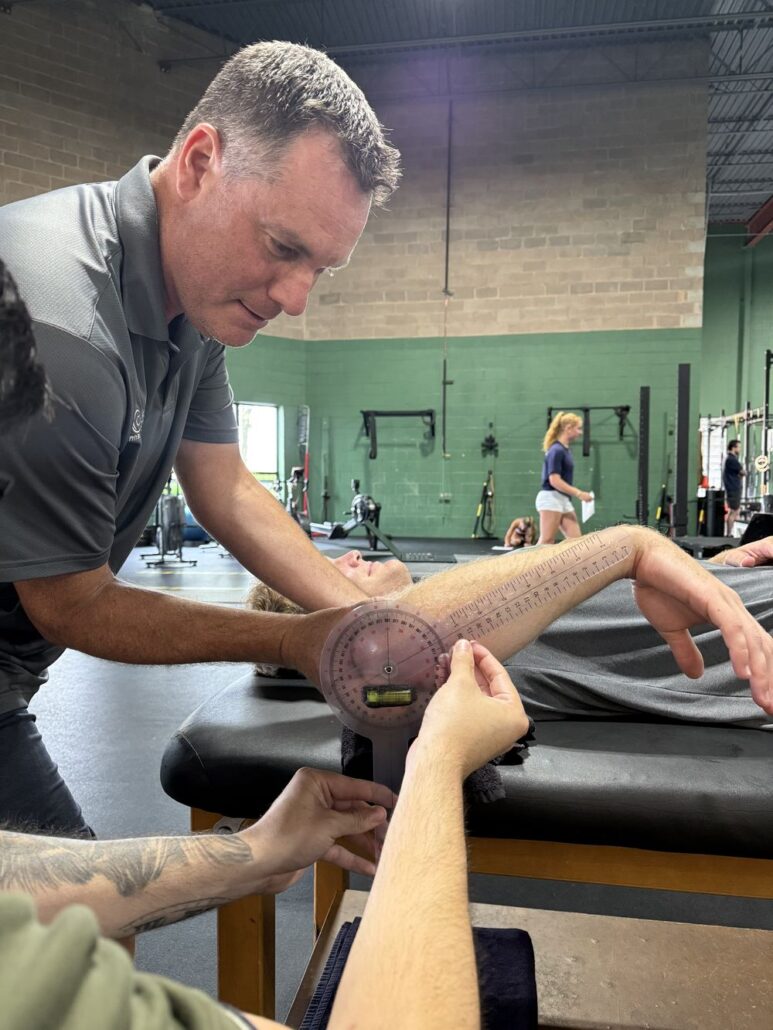
Nonoperative UCL sprain. Usually no throwing for about 6 weeks. Then I’ll use the 6-week program if we’re trying to get the athlete back in the same season, or to figure out pretty quickly if surgery is going to be needed. For a younger kid with a milder injury, or when it happens late in the season and there’s no rush, the 12-week program is a better fit. Those two also work well after a smaller surgery like a loose body removal, and even as a preseason ramp up for a healthy pitcher.
UCL repair with internal brace. These athletes can move a bit faster. They typically start throwing around 12 weeks after surgery and go through the 5-month program, which puts return to sport around 7-8 months.
Tommy John (UCL reconstruction) or the hybrid reconstruction with internal brace. Both use the 7-month program. The difference is when you start. Traditional UCL reconstruction starts the program around week 20, the hybrid around week 16. That gets most guys back around 11-12 months, some as early as 10 when everything goes right.
The 7-month program also works as a throwing progression after shoulder surgeries like labral repairs, SLAP repairs, rotator cuff and lat injuries.
Why we stop long toss at 120 feet
This one gets some pushback and surprise looks, so I’ll be direct. Past research showed the elbow torque at 120 feet is about the same as pitching off a mound. Once an athlete handles 120 feet, their tissues are ready for mound work. Going way past that just adds load without a clear reason, especially during rehab. I’m not against getting out to 150 feet but beyond that tends to overstress the elbow and becomes more unpredictable with throwing mechanics and stresses.
Distance, not the radar gun
I know a lot of people love using velocity to progress throwers. I disagree, at least during an interval throwing program. Elbow torque tracks much closer with throwing distance than with ball velocity. In fact, at 78% of max velocity the elbow is already seeing about 87% of max torque. If you progress by velocity, it’s really easy to overshoot the workload. Measure velo to keep an eye on intent if you want, but I wouldn’t build the program around it.
Finishing where the season starts
The programs end at chronic workloads of about 7.6 for the 6-week, 8 for the 12-week, 10 for the 5-month and 10.8 for the 7-month. Those numbers were picked on purpose to line up with what a pitcher actually sees in season. A lot of older programs finished way above or below that. In our experience, finishing closer to real game demands means fewer setbacks and a better first season back.
Quick answers
Which interval throwing program should I use after a nonoperative UCL sprain?
Usually there is no throwing for about 6 weeks. Then I use the 6 week program to get the athlete back in the same season, or the 12 week program for a younger athlete, a milder injury or when there is no rush late in the season.
When do you start throwing after a UCL repair with internal brace?
Around 12 weeks after surgery. They go through the 5 month program, which puts return to sport around 7 to 8 months.
When do you start throwing after Tommy John surgery?
Both a traditional UCL reconstruction and the hybrid with internal brace use the 7 month program. Traditional reconstruction starts around week 20 and the hybrid around week 16, which gets most pitchers back around 11 to 12 months.
How far should long toss go during throwing rehab?
120 feet is enough. Elbow torque at 120 feet is about the same as pitching off a mound, so once an athlete handles 120 feet their tissues are ready for mound work. I am not against 150 feet, but going beyond that adds load without a clear reason.
Should you progress a throwing program by velocity or distance?
Distance. Elbow torque tracks much closer with throwing distance than with ball velocity. At 78% of max velocity the elbow already sees about 87% of max torque, so progressing by velocity makes it easy to overshoot the workload.
What acute to chronic workload ratio should a throwing program stay in?
Between 0.7 and 1.3. Outside that range, injury risk climbs. Every session in these programs is a small, planned step up in workload.
What I take away from all of this
- One interval throwing program does not fit every injury. Pick the length that matches the diagnosis, injury history, tissue involved, the surgery, and the calendar.
- Progress by distance and volume, not radar velocity.
- Keep the ACWR between 0.7 and 1.3. Small steps, no spikes.
- 120 feet is enough. You don’t need to keep stretching long toss out during rehab….sorry!
- The programs are a guide, not a script. Pain, strength and range of motion still decide when you move forward or back off.
- Keep checking motion and strength along the way.
One limitation worth knowing: the model came from healthy college pitchers and it’s based on elbow torque, not shoulder torque. So tailor it to the athlete in front of you.
You can read the full paper, with all four programs, right here.
My recorded webinar on getting throwers back after Tommy John. Timelines, the throwing program and the mistakes I see most often. Use code LENNY to save on a yearly MedBridge subscription.
Watch the Course →
Evidence based sports rehab content, course updates and clinical pearls. No spam.
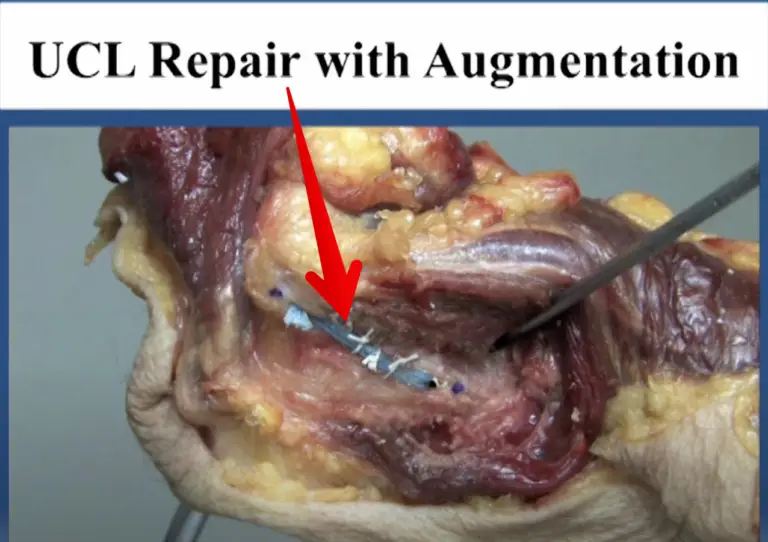
Diagnosed with an elbow UCL Tear- Reconstruction or Internal Brace surgery?
Diagnosed with a UCL tear? A plain English look at Tommy John reconstruction vs the internal brace, return to play times, and what the evidence says.
Read Post →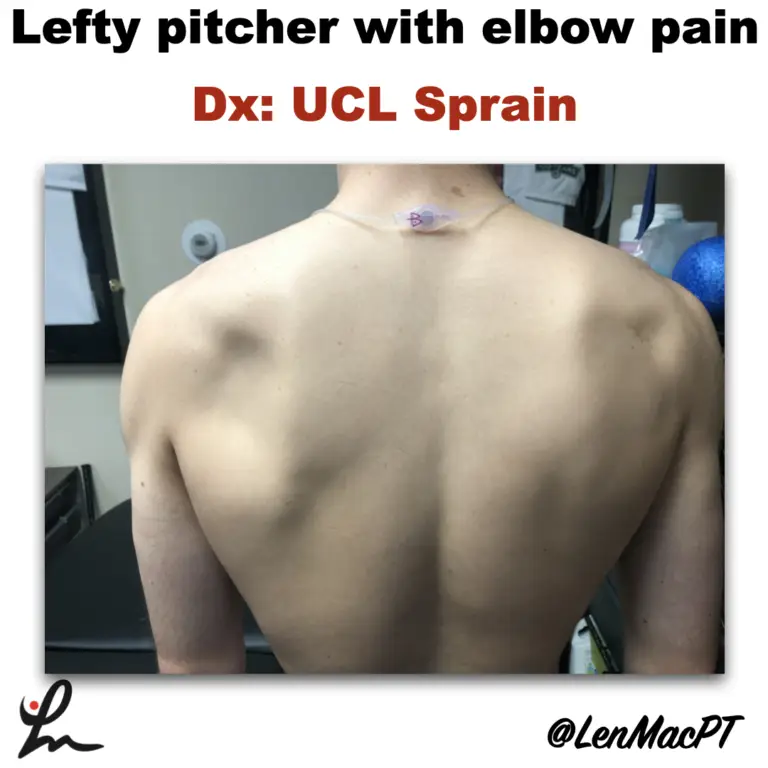
Infraspinatus atrophy in a baseball pitcher with a UCL sprain
This post discusses the evaluation and treatment of a college baseball pitcher with a finding of infraspinatus atrophy due to a spinoglenoid notch cyst.
Read Post →
Lumbar Spine Stress Injuries in Baseball Players
This blog post will describe the evaluation and treatment of baseball player wth low back pain from a diagnosis of spondylosis or spondylolisthesis.
Read Post →