 LEN
So, you just had ACL surgery, or it’s on the calendar, and you want to know what the next year looks like. I get it. The first question I hear from almost every ACL patient is “when can I play again?”
I treat a lot of ACL patients at Champion, from high school athletes to pros, and I wanted to put down in plain English what the road back really looks like. Not a vague “it takes about a year.” The actual stuff we do, when we do it, and what you need to show us before you move on.
One thing before we start. Every surgeon, graft and knee is a little different. If you had other work done, like a meniscus repair or an LET, your timeline might be slower. Your surgeon and PT have the final say. This is the ACL surgery recovery timeline I walk my patients through, from the weeks before surgery all the way back to sport.
The short answer
Plan on about 9 months or more before you’re back playing a sport that has cutting, jumping or pivoting. Soccer, basketball, football, lacrosse, skiing, you name it.
And the calendar is only one small piece of the puzzle. When rehabbing with me, you move to the next phase when your knee is ready, not when the date says so. We call it criteria over calendar. Each phase has things you need to hit before you move on. If you’re not there yet, we stay put and it’s no big deal.
I know 9 months sounds like forever. A lot of people were told 6 months 10 or 15 years ago and I still hear that number thrown out randomly nowadays. The research has moved forward, and mainly for a good reason. I’ll get to that later.
ACL recovery timeline at a glance
Here’s the whole thing on one screen. These are typical ranges, not promises. Your knee sets the pace.
| When | What you’re working on | Move on when |
|---|---|---|
| Before surgery | Calm the knee, get it straight, get the quad firing | Swelling down, full extension, walking normally |
| Week 1 | Quiet knee, straight knee, quad turning back on | Basics in place going into week 2 |
| Weeks 2 to 6 | Lose the brace and crutches, start BFR | Full extension, 10 straight leg raises with no droop |
| Weeks 6 to 12 | Into the gym, two legs then one | Full motion, little swelling, no pain in the front of the knee |
| Months 3 to 4 | Strength testing, start jumping | Quad strength 60 to 70% of the other side or better |
| Months 4 to 5 | Start running | Quad strength 70 to 80%, a few weeks of jumping going well |
| Months 5 to 9 | Sprinting, cutting, back on the field, then practice | Testing for each step |
| 9 months and beyond | Back to games | Strength and jumps over 90% of the other side, and you feel ready |
Before surgery: get your knee ready
If your surgery is still on the calendar, your rehab starts now. A calm, straight knee with a quad that fires going into surgery makes the first few weeks after surgery a lot easier.
Before surgery, I want to see:
- Swelling coming down
- A knee that goes fully straight
- Good bend in the knee
- A quad you can tighten and lift your leg with
- Normal walking, without a limp
If you have time before surgery, we also start building strength. A study comparing two big ACL groups found that people who did extra rehab before surgery had better knee function 2 years later, and more of them got back to their sport (72% vs 63%).
Going into surgery with a stiff, swollen knee is a tough way to start. If you can, get it moving and calm first.
The 3 things I check every single visit
Before we talk phases, you should know what I’m looking at every time you walk in the door. It’s the same 3 things, every visit, from day 1 until you’re running and jumping.
Swelling- Swelling shuts your quad down. If your knee is swollen, your quad won’t fire the way it should, and everything gets harder. We check it with a quick test where we sweep the fluid up and down the knee and see how much comes back. If your knee swells up after a session, we did too much. We back off and let it settle.
Extension- This is how straight your knee gets. A knee that won’t go straight makes you limp, overloads the front of the knee and gets really hard to fix the longer you wait. I’m a bit obsessive about this one. I measure both knees every visit (here’s how I measure it). The goal is to have near symmetry in your knee early on and to slowly get back to full symmetry by 3 to 4 months. Someone who is very loose-jointed will get their extension a little easier, so we don’t need to be as aggressive to achieve it.
Your kneecap- The kneecap needs to slide up, down and side to side. If it gets stiff, it blocks your knee from bending and straightening, and it makes it harder for your quad to pull the knee straight. We check it against your other side every visit. Early patella mobility is critical, and this is something that you will need to do at home.
If those 3 look good, the knee is handling rehab well and we can keep pushing. If they don’t, we slow down. If you want more on this simple approach, I wrote about it in Simplifying ACL Rehab.
Week 1: get the knee quiet
The first week is all about calming the knee down. Your goals are pretty simple:
- Get the knee straight
- Get the swelling down
- Get your quad to turn back on
- Start walking normally again
In the clinic, we work on gentle bending, moving the kneecap around and getting the quad to fire. A lot of people are shocked that they can’t lift their leg or tighten their quad after surgery. That’s normal. The knee basically tells the quad to shut off for a while. If your surgeon used a quad tendon graft, expect the quad to take a little longer to come back. I wrote about why that happens.
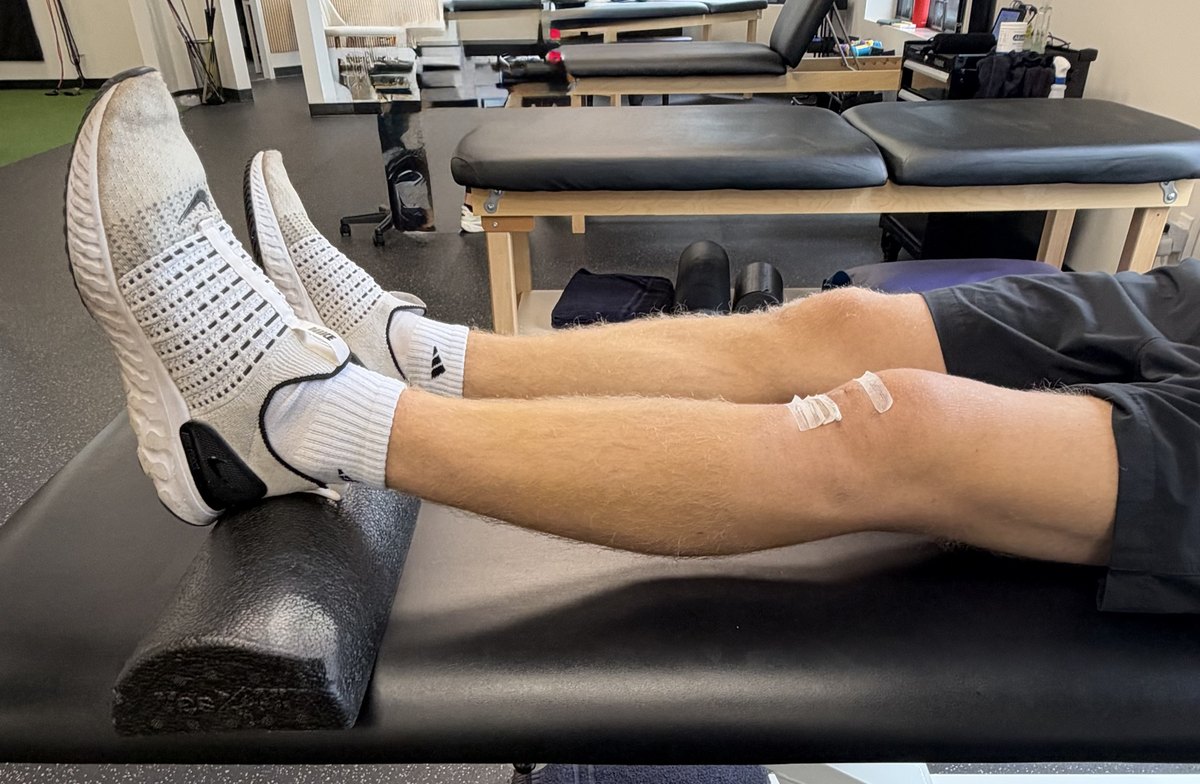
To help it turn back on, I use ice for about 10 minutes before the session and a muscle stimulation unit (NMES) while we do quad sets, straight leg raises and other simple exercises. Once your motion allows, you’ll get on the bike too.
Your home program is the most important part of week 1. Here’s what I give my patients:
- Prop your heel up on a pillow or a rolled towel with nothing behind your knee. Let the knee sag straight for 10 to 15 minutes, 4 to 5 times a day. Squeeze your quad as often as you can while you’re there.
- Move your kneecap around. Up, down, in and out, a few times a day, with your leg straight and your quad relaxed.
- Ice, elevate and compress. Try to get about 60 minutes of ice a day, broken into 10 to 15 minute bouts.
Never put a pillow under your knee to make it comfortable. It feels good, but it lets your knee get stuck in a bent position. That’s the one thing I really don’t want.
Weeks 2 to 6: lose the brace and crutches
Most people want to know when they can ditch the crutches. (If you’re curious about the brace itself, here’s what the research says about bracing after ACL surgery.) The answer is when the knee is ready. For most of my patients, that’s somewhere in the 2 to 6 week range. Before I let someone drop the brace and crutches, I want to see:
- Swelling coming down
- A fully straight knee
- A kneecap that’s moving well
- 10 straight leg raises in a row with no droop at the knee
- Good control when we walk over small hurdles or cones
That straight leg raise test is a good one. If your knee bends or sags when you lift your leg, your quad isn’t strong enough to hold the knee straight yet, and you’re not ready to walk without support.
We also work a lot on walking. Shifting your weight side to side, standing on one leg, then stepping over small hurdles forward, backward and sideways. As you get better, I’ll add things like catching a ball while you walk, so your brain has to think about something else while your knee does its job.
Around 2 weeks, once your incisions are fully healed, I like to start blood flow restriction training, or BFR. It’s a cuff that goes high up on your thigh and partly limits blood flow while you do light exercises. It lets you build strength with very light weight, which is perfect early on when the knee can’t handle heavy loading yet. Your PT will set the pressure and the sets and reps, and we slowly make it harder over a few sessions.
You’ll also start some new strength work in this phase. Knee extensions in a small range with a band, mini squats and calf raises. We keep the bike going and add time as you can handle it.
Weeks 6 to 12: into the gym
Once the knee is quiet and moving well, we get to work in the gym. The big idea here is two legs first, then one. We build the movement on both legs, then start loading the surgery side on its own.
Some of the exercises I use in this phase:
- Goblet squats
- Kettlebell deadlifts, then trap bar deadlifts
- Box step ups
- Calf raises
- Sled pushes and pulls
- Core and hip work
- Bike sprints, starting with 20 seconds hard and 40 seconds easy
At Champion, we do squats on force plates so we can see if you’re shifting your weight onto the good leg. Most people do, and they have no idea. We keep at it until you’re putting even weight through both legs.
Around week 8, we start heavier knee extensions on the machine. We start by lifting with both legs and lowering with just the surgery leg, then progress to single leg. Your quad needs heavy loading to get strong again, and this is one of the best ways to target it directly.
By about 3 to 4 months, I want the knee to bend all the way and straighten all the way, matching your other knee. Most people have a little bit of extra extension past straight, and I want the surgery side to match the other side by around 3 to 4 months. We get there slowly. There’s no reason to force it and stress the new graft.
This is also the tricky part. Around now, most people feel pretty good. Walking, stairs and daily life feel close to normal. Feeling good is not the same as being ready. The graft is still healing, and it isn’t the same as the ACL you were born with (more on that here). Your strength is still way behind the other leg, too. Enjoy feeling good, just don’t let it trick you into doing too much.
Want to see how I put all of this together for the knee? Mike Reinold and I teach it step by step in our online course, Complete Knee Evaluation and Treatment.
Check out the course →Months 3 to 4: testing and jumping
Before I let anyone start jumping, we test. And I mean actually test, with equipment, not just eyeballing it. At Champion, we use a device called a DynaMo to measure how much force your quad and hamstrings can produce, and force plates to measure your jumps.
To start jumping, I want to see:
- Usually at least 12 weeks since surgery
- Full motion, matching the other knee
- Swelling pretty much gone
- No pain in the front of the knee
- Strength on the surgery side at least 60 to 70% of the other side
Most of my patients start jumping somewhere between 12 and 14 weeks. We start easy and build up slowly. I think about jumping in 3 buckets, and we work on all 3 at the same time:
- Quick, springy hops. Small bounces in place, like jumping rope. Sometimes we use a band to take some of your weight at first.
- Jumping up. Box jumps and squat jumps, where the goal is to jump high or far.
- Landing. Stepping off a small box and learning to land soft and stop. This one is a big deal. A lot of ACL injuries happen on a bad landing.
In each bucket, we start with two legs, then one. We only make it harder once you own the one you’re on.
Months 4 to 5: start running
For most of my patients, running starts somewhere around 4 to 5 months, or about 16 to 20 weeks. I don’t go by the date alone. Before your first run, I want to see:
- A few weeks of jumping without the knee getting angry
- Quad strength at least 70 to 80% of the other side
- A quiet knee with little to no swelling, full motion and no pain in the front of the knee
I don’t use one set running program for everyone. The rules matter more than the exact intervals. Here’s how I build it:
- Walk first. You should handle a good stretch of brisk walking with no pain or swelling.
- Then walk and jog intervals. Short bouts of easy jogging with walking in between.
- Run every other day to start, so the knee gets a day to settle.
- Treadmill or track first, then outside on a flat, even surface.
- Add time before speed. Build up how long you can jog before you make it faster.
- Change one thing at a time. More time, less walking or more speed. Not all three at once.
- Keep easy runs easy. You should be able to hold a conversation.
The day after every run, check your knee. If it feels the same as before, you can move up a level next time. If you’re a little sore but it’s gone by the next day, repeat the same level. If your knee is more painful or swollen, or you’re limping, back off a level and rest a day or two.
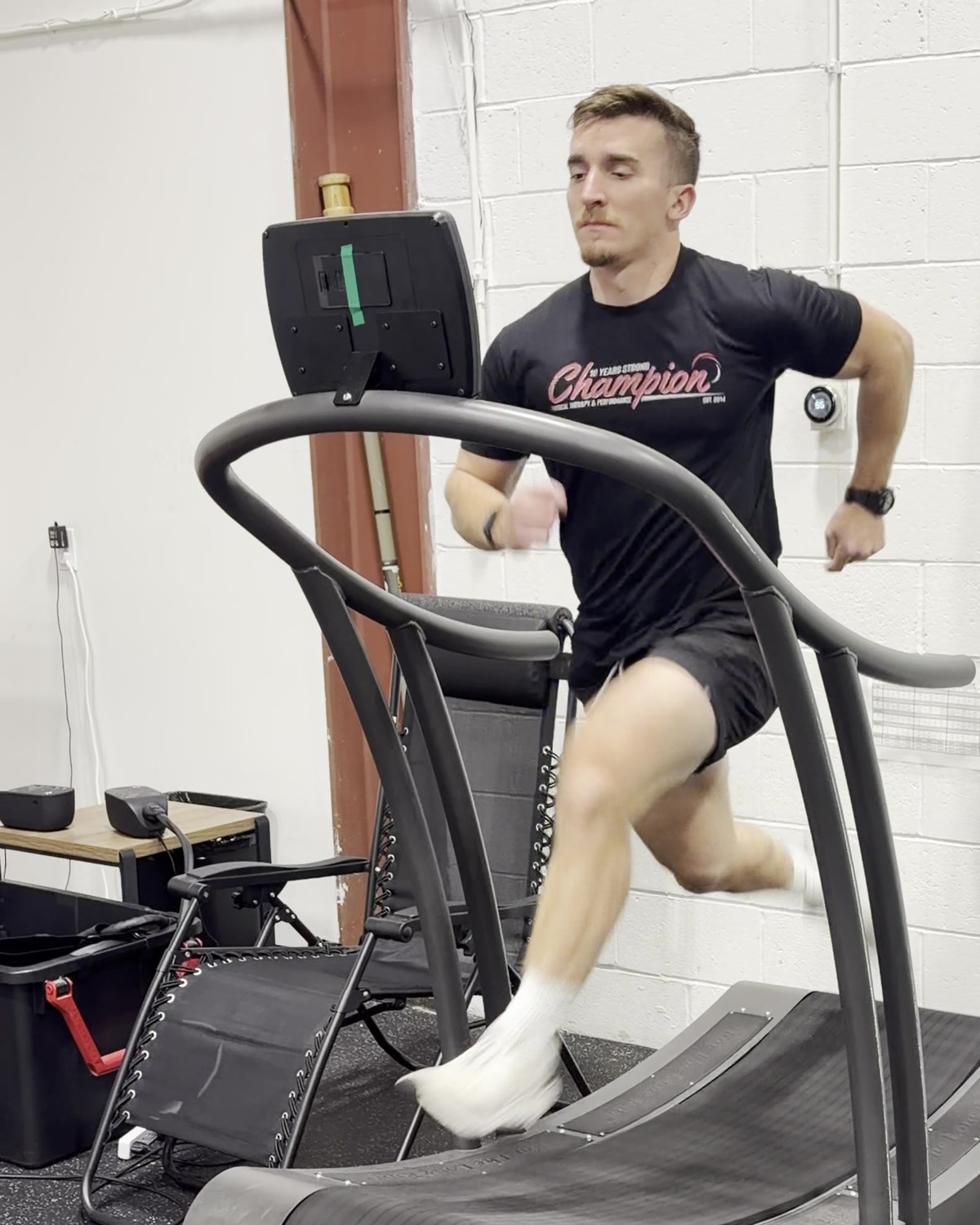
Sprinting comes later, once your quad is at 80 to 90% of the other side and you’ve done a few weeks of jogging without trouble. We start at about half speed and build toward full speed over several weeks.
Months 5 to 9: back on the field
Now it starts to look like your sport again. Return to sport isn’t one day. I break it into 3 steps, and each one has its own tests:
- On field rehab, around 5 to 8 months. You’re back outside doing rehab drills on the field, but not with the team yet.
- Back to practice, around 8 to 9 months. Usually starting with no contact.
- Back to games, usually around 9 months or later.
In this phase, we work on sprinting, cutting, slowing down and changing direction. We keep lifting heavy, too. Your strength work doesn’t stop just because you’re running and jumping.
We test along the way. Before I clear someone to play games, I want to see:
- Quad and hamstring strength on the surgery side over 90% of the other side
- Jumps on the surgery leg over 90% of the other leg
- Good cutting mechanics and sprint times close to where you were before the injury
- A quiet knee
- An athlete who feels ready
Here’s something a lot of people don’t realize. Matching your other leg isn’t enough on its own. Your other leg gets weaker after surgery too, because you haven’t been training it hard. So 90% of a weak leg can look like a pass when it isn’t. That’s why I also look at how strong your quad is compared to your body weight, and compare it to healthy athletes your age.
Month 9 and beyond: why 9 months?
If you’ve passed your testing and you feel confident, now we talk about going back to games.
So why 9 months and not 6? A few studies changed how a lot of us think:
- This study out of Delaware and Oslo found the risk of hurting the knee again dropped by about half for every month people waited to return, up to 9 months. People who returned with stronger, more even quads also got hurt less.
- A study of pro athletes found that players who didn’t pass all of their return to sport tests were 4 times more likely to tear the new graft.
- This review found that close to 1 in 4 young athletes who return to a high risk sport will hurt their ACL again, either the same knee or the other one.
I’m not sharing that to scare anyone. I’m sharing it because time and testing are two things we can control. 9 months isn’t a magic number. Some athletes are ready a little sooner, and plenty need longer. But if someone wants to go back early, the testing needs to back it up.
The mental side is real
It’s really common to be nervous about your knee, even when the tests look great. Plenty of people are a little scared the first time they cut or land on it. That’s normal. Talk to your PT about it. For athletes who seem worried about their knee, I’ll use a short questionnaire to get a feel for where their head is at. We can build your confidence the same way we build your strength, one step at a time. ACL rehab is never easy, and I wrote more about that here.
It’s also worth knowing that not everyone gets back to the same level. A big review found that about 65% of people got back to their preinjury level of sport. The ones who do the work, are patient and trust the process give themselves the best shot.
Questions to ask your PT
If you’re going through ACL rehab right now, here are a few questions worth asking:
- Is my knee fully straight, matching my other knee?
- How do you check my swelling, and is it going down?
- When are we going to test my strength, and how?
- What do I need to hit before I start jumping? Running? Practice?
- How strong is my quad compared to my body weight, not just my other leg?
A good PT will have answers for all of these.
Common questions about ACL recovery
How long does ACL surgery recovery take?
For cutting, jumping and pivoting sports, plan on about 9 months or more. Daily life comes back much sooner. Most people are walking normally within the first several weeks.
When can I walk without crutches after ACL surgery?
For most of my patients, somewhere between 2 and 6 weeks. You need a straight knee, swelling coming down and 10 straight leg raises with no droop first. A meniscus repair can slow this down.
When can I drive after ACL surgery?
It depends on which knee, whether you drive an automatic, and whether you’re off the pain medicine. A right knee has to be strong enough to hit the brake fast. Ask your surgeon before you get behind the wheel.
When can I run after ACL surgery?
For most of my patients, around 4 to 5 months. You should have a quiet knee, a few weeks of jumping going well and quad strength around 70 to 80% of the other side.
Is it normal for my knee to still swell months after surgery?
A little swelling after a hard session can hang around for a while. The key is the trend. If your knee swells up after a session, you did too much, so back off and let it settle. If the swelling jumps up and doesn’t settle, call your surgeon or PT.
Can I go back to sports before 9 months?
Some athletes are ready a little sooner. But going back early goes along with a higher risk of hurting the knee again, so the testing needs to back it up.
What I tell my ACL patients
- Get the knee straight early. It sets up everything else
- Keep the knee quiet. If it swells after a session, you did too much
- Your quad is the whole game. Work it hard and often
- Jumping usually starts around 3 months, running around 4 to 5 months
- Plan on 9 months or more for cutting and jumping sports
- Feeling good is not the same as being ready
- Get tested before you go back. Strength matters a lot
- Your surgeon and PT know your knee best, so follow their plan
If you’re a PT or AT reading this, feel free to send it to your ACL patients. And if you want to go deeper on the rehab side, Mike Reinold and I cover ACL rehab in our Knee Evaluation and Treatment course.
References
- Failla MJ, Logerstedt DS, Grindem H, et al. Does extended preoperative rehabilitation influence outcomes 2 years after ACL reconstruction? A comparative effectiveness study between the MOON and Delaware-Oslo ACL cohorts. Am J Sports Med. 2016;44(10):2608-2614. doi.org/10.1177/0363546516652594
- Grindem H, Snyder-Mackler L, Moksnes H, Engebretsen L, Risberg MA. Simple decision rules can reduce reinjury risk by 84% after ACL reconstruction: the Delaware-Oslo ACL cohort study. Br J Sports Med. 2016;50(13):804-808. doi.org/10.1136/bjsports-2016-096031
- Kyritsis P, Bahr R, Landreau P, Miladi R, Witvrouw E. Likelihood of ACL graft rupture: not meeting six clinical discharge criteria before return to sport is associated with a four times greater risk of rupture. Br J Sports Med. 2016;50(15):946-951. doi.org/10.1136/bjsports-2015-095908
- Wiggins AJ, Grandhi RK, Schneider DK, Stanfield D, Webster KE, Myer GD. Risk of secondary injury in younger athletes after anterior cruciate ligament reconstruction: a systematic review and meta-analysis. Am J Sports Med. 2016;44(7):1861-1876. doi.org/10.1177/0363546515621554
- Ardern CL, Taylor NF, Feller JA, Webster KE. Fifty-five per cent return to competitive sport following anterior cruciate ligament reconstruction surgery: an updated systematic review and meta-analysis. Br J Sports Med. 2014;48(21):1543-1552. doi.org/10.1136/bjsports-2013-093398
Want to go deeper on the knee? This is the online course I teach with Mike Reinold. ACL, patellofemoral pain, meniscus, progressive loading and return to sport.
Black Friday sale: 25% off with code BF2026 through Nov 30.
Enroll Now →
Evidence based sports rehab content, course updates and clinical pearls. No spam.
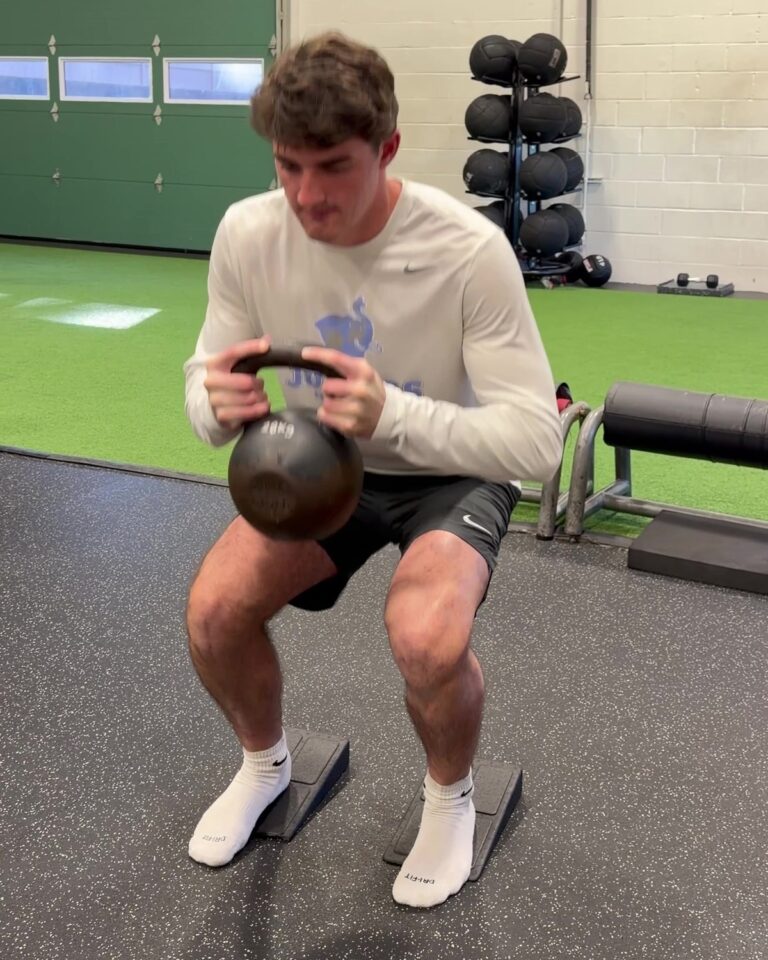
Should You Squat Through Patellofemoral Pain?
Should you stop squatting with patellofemoral pain? Usually not. How to modify squats with range, load and tempo, a simple pain rule, and a squat progression.
Read Post →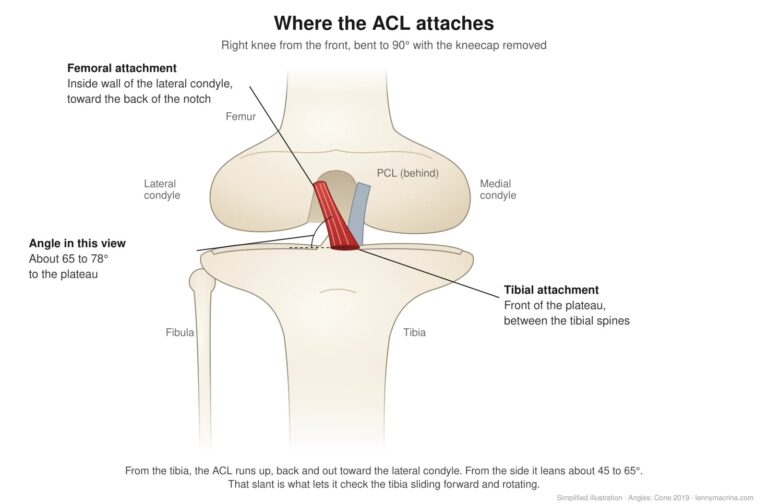
ACL Anatomy: 5 Things Rehab Clinicians Should Know
What the research says about ACL anatomy: its size and shape, the two bundles, the flat ribbon, nerves and blood supply, and why it matters for ACL rehab.
Read Post →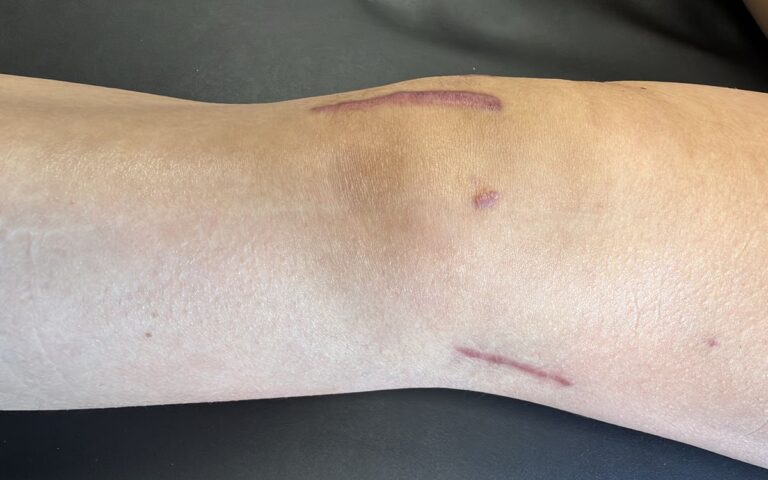
ACL Reconstruction With an LET: What Changes in Rehab?
More ACL patients are getting a lateral extra-articular tenodesis (LET), even with patellar and quad tendon grafts. What the research says and what changes in rehab.
Read Post →